Looking at the top 10 sports uniform Manufacturers in China for global buyers, this guide dives into the companies shaping today’s competitive teamwear scene. China has a ton of manufacturing capacity, offers pretty flexible customization options, and has some serious textile know-how. But honestly, the quality and capabilities can vary a lot from one factory to another.
This isn't just about pretty catalogs; we’re evaluating actual buyer experiences. We pay attention to details like fabric weight, how well the colors hold up, stitching quality, how accurately sizes are graded, the precision of samples, minimum order requirements, and how smoothly communication flows during delivery. If you get a look at a sample first, it can save you from surprises—like loose seams or uneven sponsor panels—before you place a big order. Plus, checking out factory audits, quality records, certifications, and how transparent the business is really helps get a better grip on who’s reliable.
Bill Bowerman, the co-founder of Nike and a legendary coach, once said, “If you have a body, you are an athlete.” And honestly, those words still hold true today. Sports Uniforms aren’t just about colors—they need to work for real bodies, handle repeated movement, adapt to different weather conditions, and represent a team’s identity. They're not just pretty outfits.
Performance is key.
The companies on this list might support a variety of sports—football kits, basketball uniforms, Rugby Gear, training clothes—and evenElite Sports Uniforms tailored for schools, clubs, academies, and pro teams. Some are great at sublimation printing, others shine in cut-and-sew techniques or work with high-tech fabrics. Keep in mind—each has its own strengths, and that’s really important to consider.
Now, no ranking is perfect. Factory capacities change, and just because a sample looks great doesn’t mean every future order will be flawless. It’s smart to ask for up-to-date proof of their work, compare quotes carefully, and test how well they communicate before you sign on. This overview is just a helpful starting point. At the end of the day, your choice should be based on your budget, timeline, needed performance, and quality expectations.
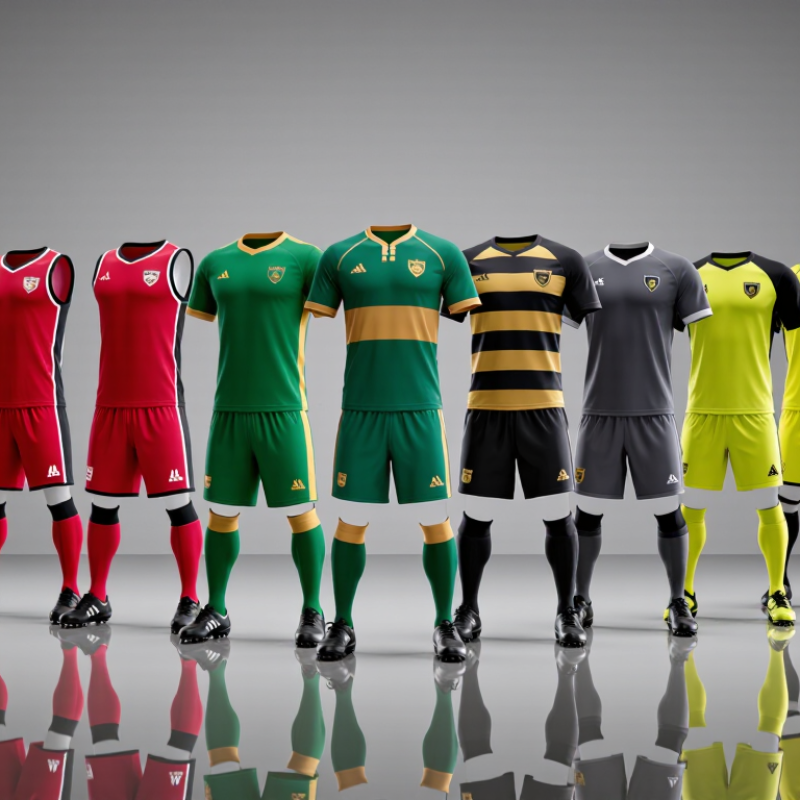
China’s role in global sports uniform manufacturing extends beyond low-cost production. China Customs reported approximately US$293 billion in textile and apparel exports in 2023. The WTO’s World Trade Statistical Review 2024 also identifies China as the leading exporter across major clothing categories. This scale supports reliable sourcing for schools, clubs, and corporate teams.
Manufacturers benefit from dense regional supply chains. Fabric mills, dyeing facilities, embroidery workshops, and packaging suppliers often operate within short transport distances. A buyer can test recycled polyester, mesh panels, and moisture-control fabrics through one coordinated production network. Technical sampling is usually faster when fabric development and garment assembly remain nearby. However, export volume does not guarantee equal quality.
Production discipline matters more than factory size. Experienced buyers should review pre-production samples, colorfastness results, seam strength, measurement tolerances, and washing performance. The International Textile Machinery Federation’s shipment reports continue to show China’s major role in global textile equipment investment, supporting modern knitting and finishing capacity. Still, some smaller workshops need closer supervision. That weakness deserves honest attention. Digital tracking helps, but physical inspections remain valuable for custom uniforms. Procurement teams should compare audit records, laboratory reports, lead times, and corrective-action history before approving bulk orders. China offers exceptional manufacturing depth, yet dependable performance comes from evidence, not assumptions.
Evaluating China’s top sports uniform manufacturers requires more than comparing prices. Grand View Research estimated the global sports apparel market at about US$248.9 billion in 2023. This scale increases pressure on factories to deliver speed, consistency, and flexible customization. Ask for production records, not only polished samples. Check fabric GSM, seam strength, colorfastness, shrinkage, and print durability after washing. A supplier should explain its testing process clearly. Vague answers are a warning sign.
Printed Sports Uniforms need special inspection because artwork can hide fabric defects. Request a pre-production sample with the exact logo size, ink type, colors, and placement. Compare it under daylight and indoor lighting. According to Textile Exchange’s 2024 Materials Market Report, polyester represented 57% of global fiber production in 2023. Therefore, buyers should verify recycled-content claims through transaction certificates or other traceable documents. I have seen attractive samples fail after repeated washing. A good appearance is not enough.
Tips: Build a scorecard covering quality, capacity, communication, lead time, and corrective action. Visit the factory when possible, or use an independent audit. Ask how many inspection points occur before packing. Confirm carton labels, size ratios, and replacement procedures in writing. Do not rely on the lowest quotation. It may exclude testing, packaging, or realistic production waste. Even experienced buyers can overlook small details, especially during peak seasons. Review everything twice.
Choosing among the top 10 Chinese sports uniform manufacturers requires more than comparing prices. Global buyers should examine production experience, fabric knowledge, and communication quality. A reliable supplier can explain polyester blends, moisture control, colorfastness, and stitching density in practical terms. Sports Uniforms should match the sport, climate, movement, and washing conditions.
Request physical samples before placing a large order. Check the collar shape, seam strength, print edges, and size measurements. A useful factory should provide clear specifications, realistic lead times, and documented quality procedures. Ask whether the factory manages cutting, sewing, printing, and packing internally. Production control can vary between workshops.
Compliance matters. Buyers should request relevant test reports, material declarations, and social responsibility records. These documents do not replace independent verification. An on-site audit or third-party inspection may reveal crowded storage areas, weak labeling, or inconsistent measurements. Small details matter. I have seen attractive samples fail during repeated washing because the logo adhesive softened. That risk deserves attention.
Price is only one part of the decision. Minimum order quantities, sample fees, packaging, shipping terms, and remake policies can change the final cost. Some manufacturers communicate quickly but document poorly. Others offer detailed paperwork yet respond slowly to design changes. Neither pattern is ideal. Keep a written measurement chart and approve one final sample before production. Even experienced buyers can overlook sleeve length or color differences under factory lighting.
This buyer-oriented benchmark compares the most important sourcing capabilities commonly evaluated when selecting Chinese sports uniform manufacturers. The index is normalized to 100 and emphasizes production scalability, customization, quality control, export readiness, sustainable material options, and order flexibility rather than company or brand performance.
Global buyers comparing China’s top sports uniform manufacturers should begin with product categories, not factory photos. Common ranges include football kits, basketball sets, volleyball uniforms, running singlets, rugby jerseys, and training tracksuits. Grand View Research valued the global sports apparel market at about USD 231 billion in 2022, with continued growth projected through 2030. This demand supports broader Team sports uniforms wholesale programs, but category depth still varies by supplier.
Customization usually starts with a technical pack. Buyers can specify fabric weight, moisture control, stretch level, collar shape, sleeve length, and seam construction. Sublimation suits full-color patterns and does not add heavy surface layers. Embroidery works better for small logos on jackets. Heat-transfer numbers offer flexible player changes, although repeated washing may reduce durability. A reliable manufacturer should provide size sets, color swatches, pre-production samples, and documented inspection points. Small details matter. A two-centimeter sleeve error can affect team comfort.
Recent textile industry reports from Textile Exchange emphasize recycled-material growth and stronger traceability expectations. Therefore, buyers should request fiber composition, colorfastness results, wash-test records, and supplier declarations. Custom labels, packaging, folding methods, and mixed-size cartons can also be arranged. Minimum order quantities deserve careful review. Lower quantities may raise unit costs sharply. Yet large orders can create excess stock when sizing forecasts are weak. That is an easy mistake to underestimate. A thoughtful supplier should discuss revisions openly, because the first sample is rarely perfect.
China’s leading sports uniform manufacturers are often judged by more than price or catalog variety. Global buyers should examine quality systems, material consistency, and production control. A reliable factory can provide fabric test reports, sample records, and clear inspection procedures. These documents should match the actual production batch, not only a sales presentation.
Common materials include polyester, recycled polyester, nylon, and elastane blends. Their performance depends on weight, stretch recovery, breathability, and colorfastness. Buyers should request GSM details and test results for washing, rubbing, pilling, and perspiration. Sublimation printing suits detailed patterns, while heat transfer and embroidery require different durability checks. Small defects matter.
Production capability also needs practical verification. A capable manufacturer may offer pattern development, digital sampling, automated cutting, stitching lines, and final packing inspection. Ask about monthly capacity, minimum order quantities, sample timelines, and backup material sources. An on-site or third-party inspection can reveal loose threads, uneven seams, incorrect sizing, or weak logos.
No factory is perfect. Even experienced suppliers can face fabric delays or inconsistent shade matching. Therefore, buyers should approve a sealed sample, define acceptable quality limits, and record corrective actions. Certifications can support trust, but current evidence matters more than impressive claims. Regular communication, traceable production records, and honest reporting create stronger long-term cooperation.
| Rank | Anonymous Supplier Profile | Main Production Region | Core Product Categories | Common Fabric Composition | Quality and Compliance Framework | Decoration Methods | Typical MOQ | Estimated Monthly Capacity | Typical Production Lead Time | Best Fit for Global Buyers |
|---|---|---|---|---|---|---|---|---|---|---|
| 1 | Profile A: Large Integrated Teamwear Factory | Fujian / Guangdong | Football, basketball, rugby, training sets | 100% polyester; recycled polyester options; elastane blends | ISO 9001-based quality systems; CPSIA and REACH testing available on request | Sublimation, embroidery, heat transfer, screen printing | 100–300 sets per style | 80,000–150,000 pieces | 25–40 days after approval | International clubs, distributors, and private-label programs |
| 2 | Profile B: Custom Sublimation Specialist | Jiangsu / Zhejiang | Cycling, esports, running, team uniforms | 150–180 gsm polyester; moisture-management mesh | Colorfastness, dimensional stability, seam-strength inspection | Full-panel sublimation and digital transfer printing | 30–100 pieces per design | 40,000–90,000 pieces | 18–30 days after artwork approval | Small and medium teams requiring detailed graphics |
| 3 | Profile C: Performance Knitwear Manufacturer | Zhejiang | Track suits, training tops, athletic shirts | Polyester interlock, bird-eye mesh, recycled yarn blends | AQL-based inspections; pilling, colorfastness, and shrinkage testing | Embroidery, transfer printing, silicone badges | 300–500 pieces per color | 60,000–120,000 pieces | 30–45 days | Retail collections and recurring teamwear orders |
| 4 | Profile D: Low-MOQ Custom Uniform Workshop | Guangdong | School sportswear, amateur clubs, promotional kits | Polyester mesh, cotton-polyester blends, spandex jersey | Pre-production samples; measurement and logo-placement checks | Heat transfer, vinyl, embroidery, direct printing | 20–50 pieces per design | 15,000–40,000 pieces | 15–25 days | Start-ups, schools, local clubs, and test orders |
| 5 | Profile E: Sustainable Sportswear Producer | Jiangsu / Fujian | Eco-teamwear, yoga, fitness, running apparel | Recycled polyester, recycled nylon, elastane blends | GRS or OEKO-TEX documentation may be available by material and order | Sublimation, water-based printing, recycled trims | 300–800 pieces per style | 30,000–70,000 pieces | 35–50 days | Buyers with documented material and sustainability requirements |
| 6 | Profile F: Cut-and-Sew Teamwear Factory | Fujian | Football kits, volleyball, handball, combat sportswear | Polyester mesh, pique, brushed fleece, stretch jersey | Inline inspection, finished-goods inspection, needle control | Sew-on patches, embroidery, screen printing, transfers | 200–500 sets per style | 50,000–100,000 pieces | 30–45 days | Buyers needing multiple garment constructions and trims |
| 7 | Profile G: Export-Oriented OEM/ODM Factory | Guangdong / Zhejiang | Teamwear, leisure sportswear, private-label collections | Polyester, nylon, cotton blends, elastane performance fabrics | ISO 9001-based procedures; buyer-specific social and product audits | Sublimation, embroidery, appliqué, woven labels | 500–1,000 pieces per style | 80,000–160,000 pieces | 35–55 days | Importers, chain retailers, and established online brands |
| 8 | Profile H: High-Performance Compression Specialist | Zhejiang / Guangdong | Compression tops, base layers, leggings, recovery apparel | Nylon-spandex, polyester-spandex, warp-knit technical fabrics | Stretch recovery, colorfastness, seam and fit testing | Reflective transfer, silicone print, flat embroidery | 300–600 pieces per style | 25,000–60,000 pieces | 40–60 days | Performance, fitness, cycling, and recovery product lines |
| 9 | Profile I: School and Institutional Uniform Supplier | Guangdong / Fujian | School kits, collegiate uniforms, event apparel | Polyester pique, interlock, cotton-polyester, fleece | Size-set approval, color matching, carton and packing inspection | Embroidery, screen printing, appliqué, heat transfer | 500–1,500 pieces per program | 40,000–100,000 pieces | 30–50 days | Education groups, academies, and institutional procurement |
| 10 | Profile J: Flexible Sampling and Private-Label Factory | Zhejiang / Jiangsu | Yoga, gymwear, running, athleisure, team basics | Recycled polyester, nylon-spandex, cotton-modal blends | Pre-shipment inspection; buyer-requested REACH and restricted-substance testing | Digital printing, embroidery, silicone labels, woven labels | 50–200 pieces per style | 20,000–50,000 pieces | 20–35 days | Emerging brands, online sellers, and frequent product launches |
Note: Company names and brand-specific data are intentionally omitted. Production capacity, MOQ, lead time, fabric composition, and certification availability are typical procurement ranges for comparable China-based sportswear suppliers and should be confirmed through samples, factory audits, test reports, and a written purchase specification.
Selecting among China’s top 10 sports uniform manufacturers requires more than comparing catalog prices. Ask for fabric composition, size charts, color standards, sampling fees, and minimum order quantities. For Soccer Team Uniforms, request one pre-production sample before approving bulk work. A low quote may exclude names, badges, packaging, or inspection costs. That mistake is common.
Pricing should show fabric, printing, stitching, packaging, tooling, and delivery separately. Confirm whether the quotation uses FOB, CIF, or DDP terms. UNCTAD’s Review of Maritime Transport 2024 states that shipping carries over 80% of global merchandise trade. Freight changes can therefore affect landed costs quickly. Build a 5–10% contingency, but challenge unexplained increases. The WTO World Trade Statistical Review 2024 recorded a 1.2% decline in merchandise trade volume during 2023. Demand can shift faster than a seasonal buying plan.
Tips: Verify the factory’s business license, export history, production address, and recent audit records. Match the beneficiary account with the legal company name. Order a small pilot batch first. Inspect random pieces for seam strength, color bleeding, logo alignment, and measurement accuracy. A spreadsheet helps, but it cannot reveal every production weakness. Consider third-party inspection before shipment, especially for large orders. Also confirm carton dimensions and shipment weight, not only unit prices. Shipping estimates often fail there.
Review quality records, monthly capacity, lead times, communication, and corrective actions. Ask for real production records, not only attractive samples. A low quote may exclude testing or packaging.
Request GSM, composition, stretch recovery, breathability, shrinkage, and colorfastness results. Also check rubbing, pilling, perspiration, and washing performance. Small defects matter.
It confirms the exact fabric, colors, measurements, artwork size, and placement. Compare the sample under daylight and indoor lighting. A polished sample can mislead.
Check ink coverage, logo alignment, color accuracy, and print durability after washing. Artwork can hide fabric defects. Wash it repeatedly.
Common choices include polyester, recycled polyester, nylon, and elastane blends. Ask for traceable evidence supporting recycled-content claims. Do not rely on labels alone.
The quotation should separate fabric, printing, stitching, packaging, tooling, and delivery. Confirm shipping terms and possible inspection charges. Unexpected costs happen.
Check the business license, production address, export history, and recent audit records. Match the payment account with the legal company name. Order a small pilot batch.
Randomly check seam strength, measurements, color bleeding, logo placement, labels, and size ratios. Confirm carton dimensions, shipment weight, and replacement procedures in writing. No checklist catches everything.
China has become a major hub for Sports Uniforms manufacturing, offering global buyers a broad combination of production capacity, competitive pricing, and flexible customization. This guide explains how to evaluate leading Chinese suppliers by reviewing their experience, communication, sample quality, production systems, certifications, and ability to meet international requirements. It also introduces the key factors buyers should consider when comparing the top ten manufacturers, including product range, design support, fabric selection, printing, embroidery, sizing, and packaging services.
The article further examines quality standards, moisture-wicking and durable materials, factory capabilities, minimum order quantities, pricing structures, lead times, shipping arrangements, and payment considerations. To reduce purchasing risks, buyers should verify supplier information, inspect samples, confirm quality control procedures, and use clear contracts before placing an order. With careful research and professional communication, international customers can build reliable supply relationships and source customized Sports Uniforms that meet performance, appearance, and delivery expectations.